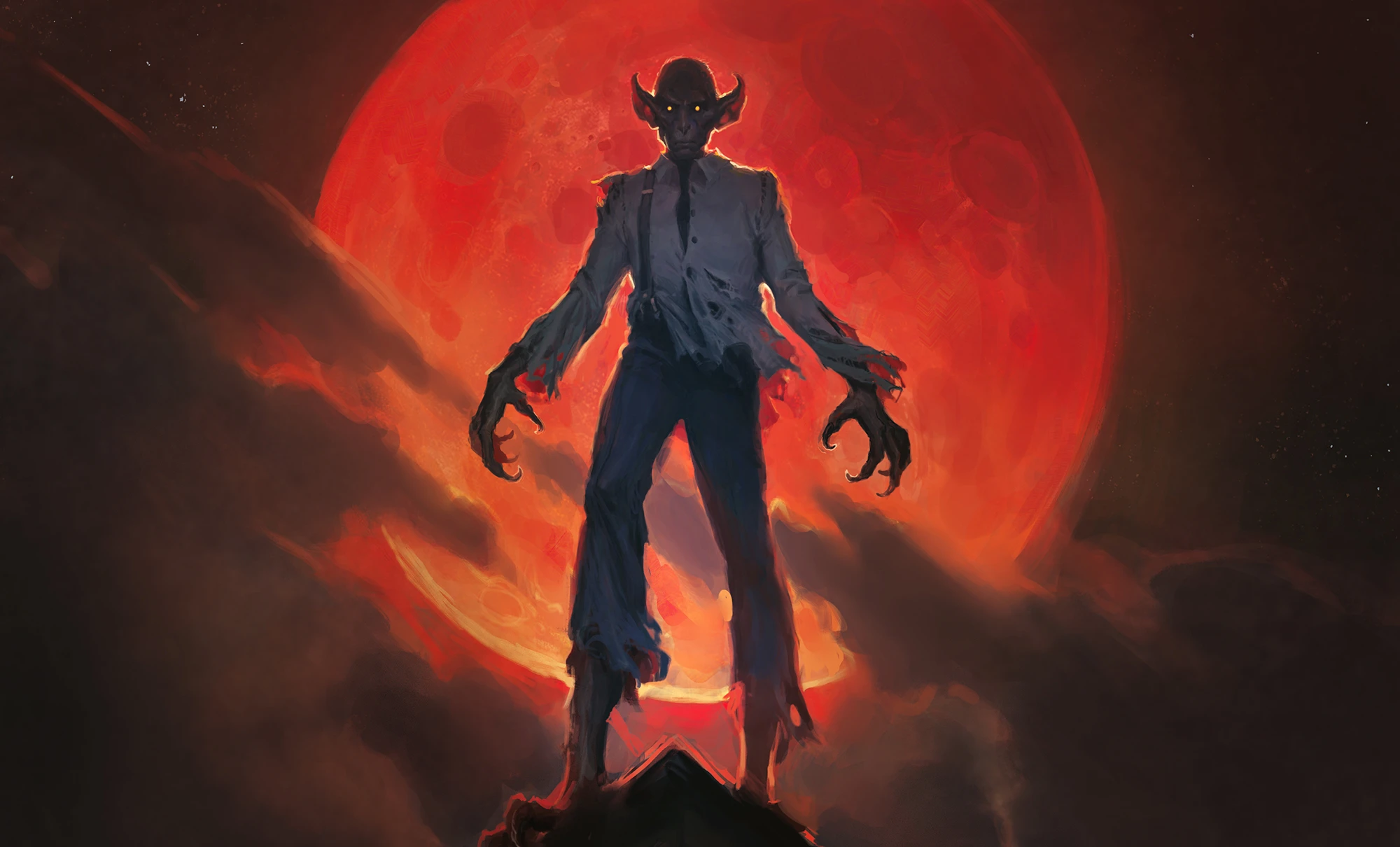
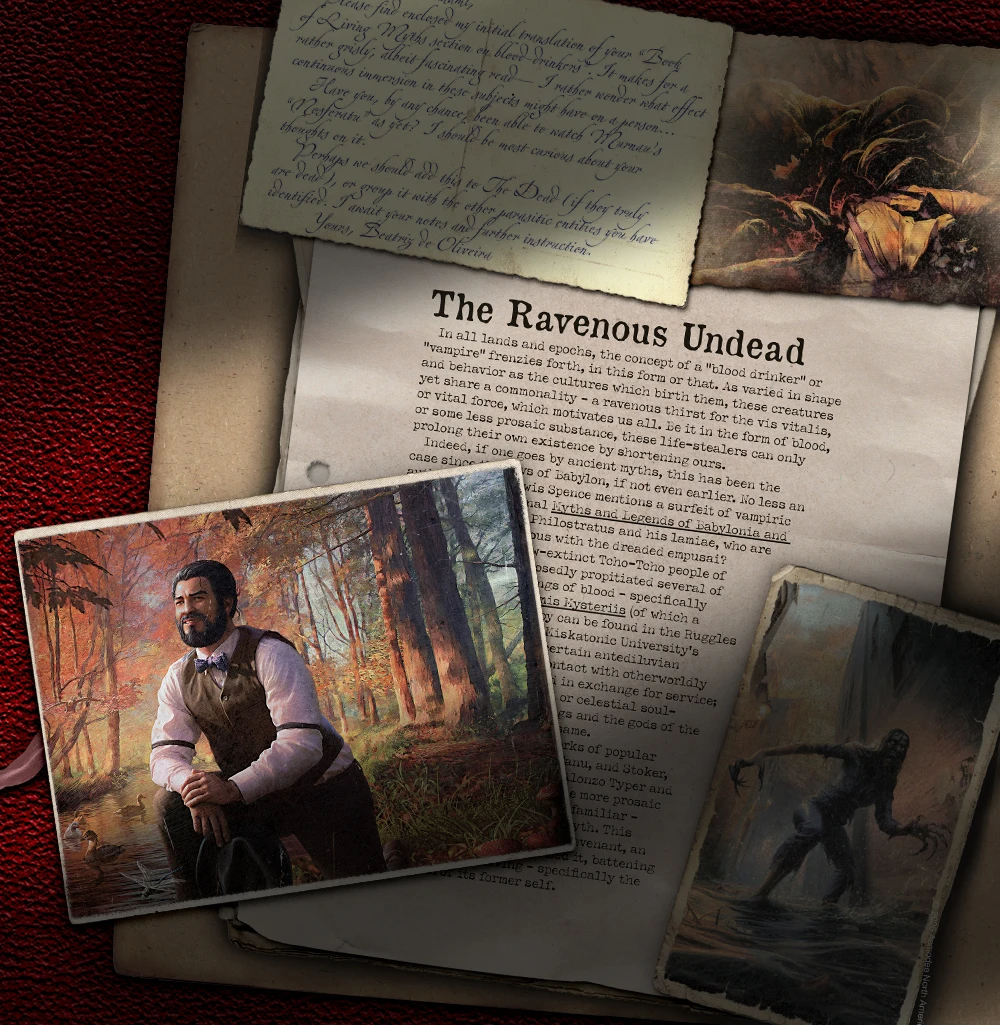
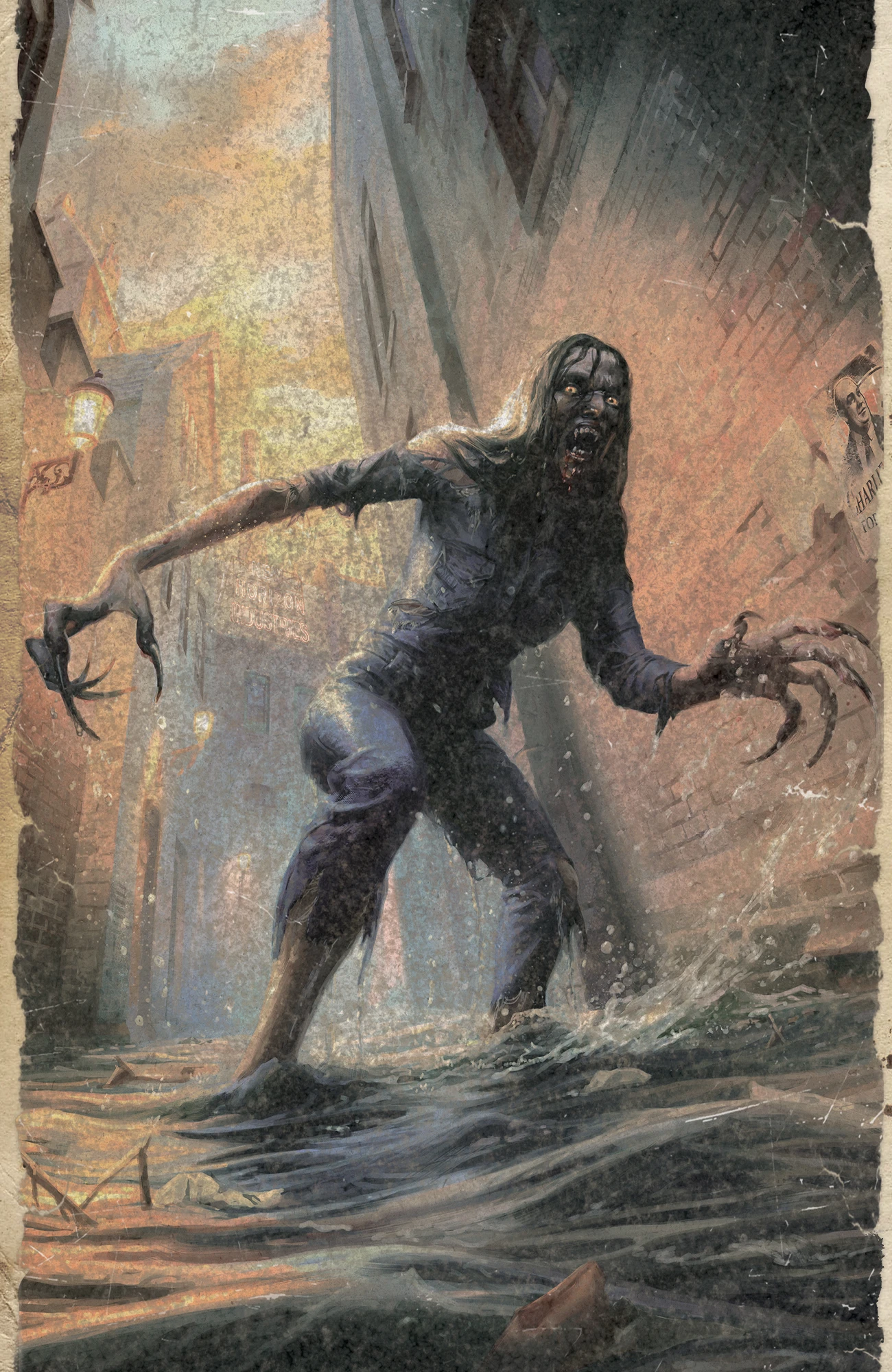
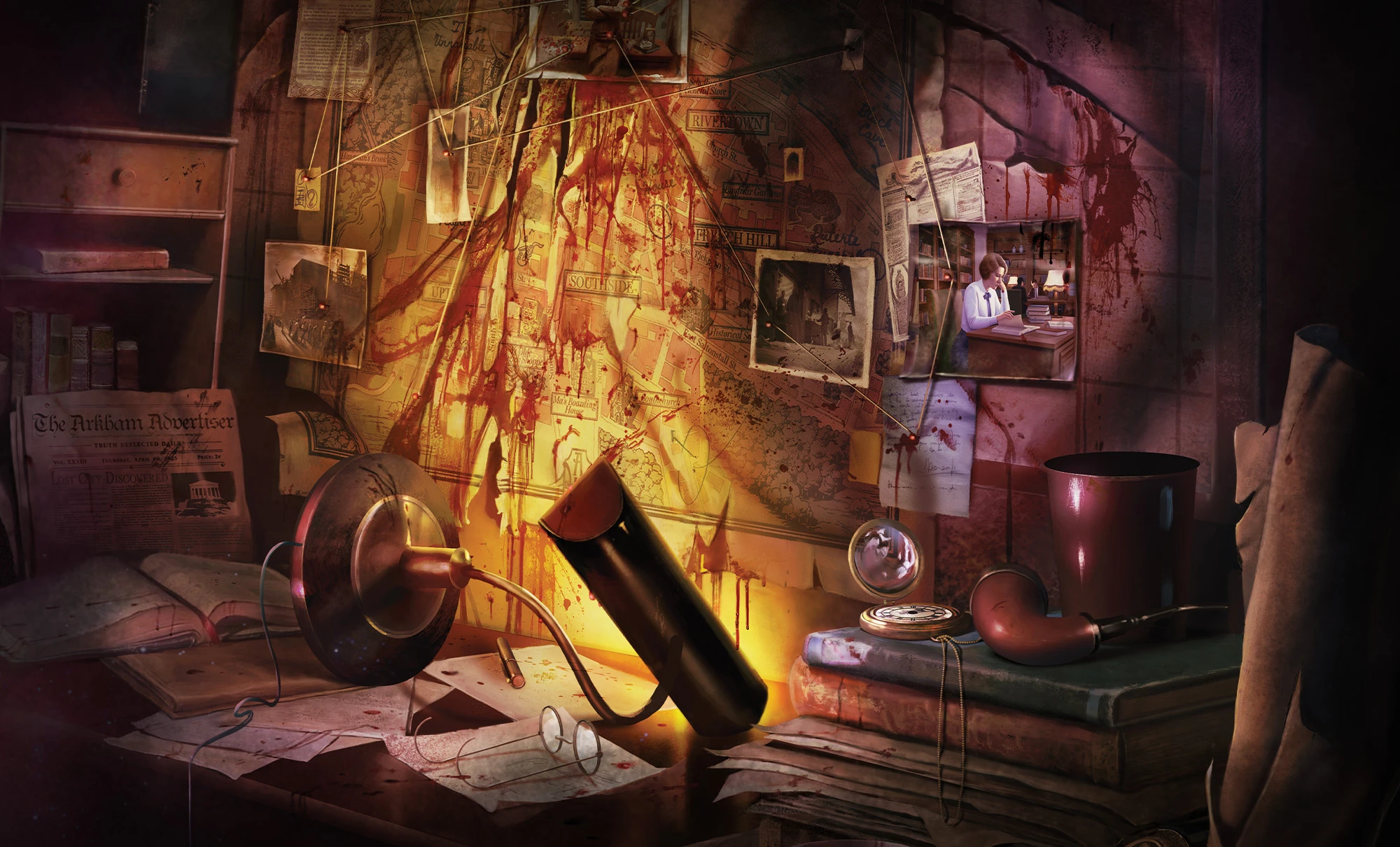
Detective Reynolds and a number of investigators have been baffled by a series of mysterious disappearances in Arkham. Precious little evidence has been found so far, with only vague reports of pooled blood and shreds of clothing left behind. Their investigation was at a dead end, that is, until they received a tip from concerned Arkham citizen Christopher Stern. He claims to have witnessed his own wife drinking the blood from their neighbor’s corpse.
The investigators reach out to their experienced associates for guidance on what to expect. As it happens, a portion of the latest translation for folklorist Kōhaku’s Narukami’s Book of Living Myths has just arrived from Beatriz de Oliveira, graduate student of Miskatonic University’s School of Languages. Whether the text offers any useful insights pertaining to their current case remains to be seen…
Dear Mr. Narukami,
Please find enclosed my initial translation of your “Book of Living Myths” section on blood-drinkers. It makes for a rather grisly, albeit fascinating read—I rather wonder what effect continuous immersion in these subjects might have on a person… Have you, by any chance, been able to watch Murnau’s “Nosferatu” as yet? I should be most curious about your thoughts on it.
Perhaps we should add this to The Dead (if they truly are dead), or group it with the other parasitic entities you have identified. I await your notes and further instruction.
Yours, Beatriz de Oliveira
The Ravenous Undead
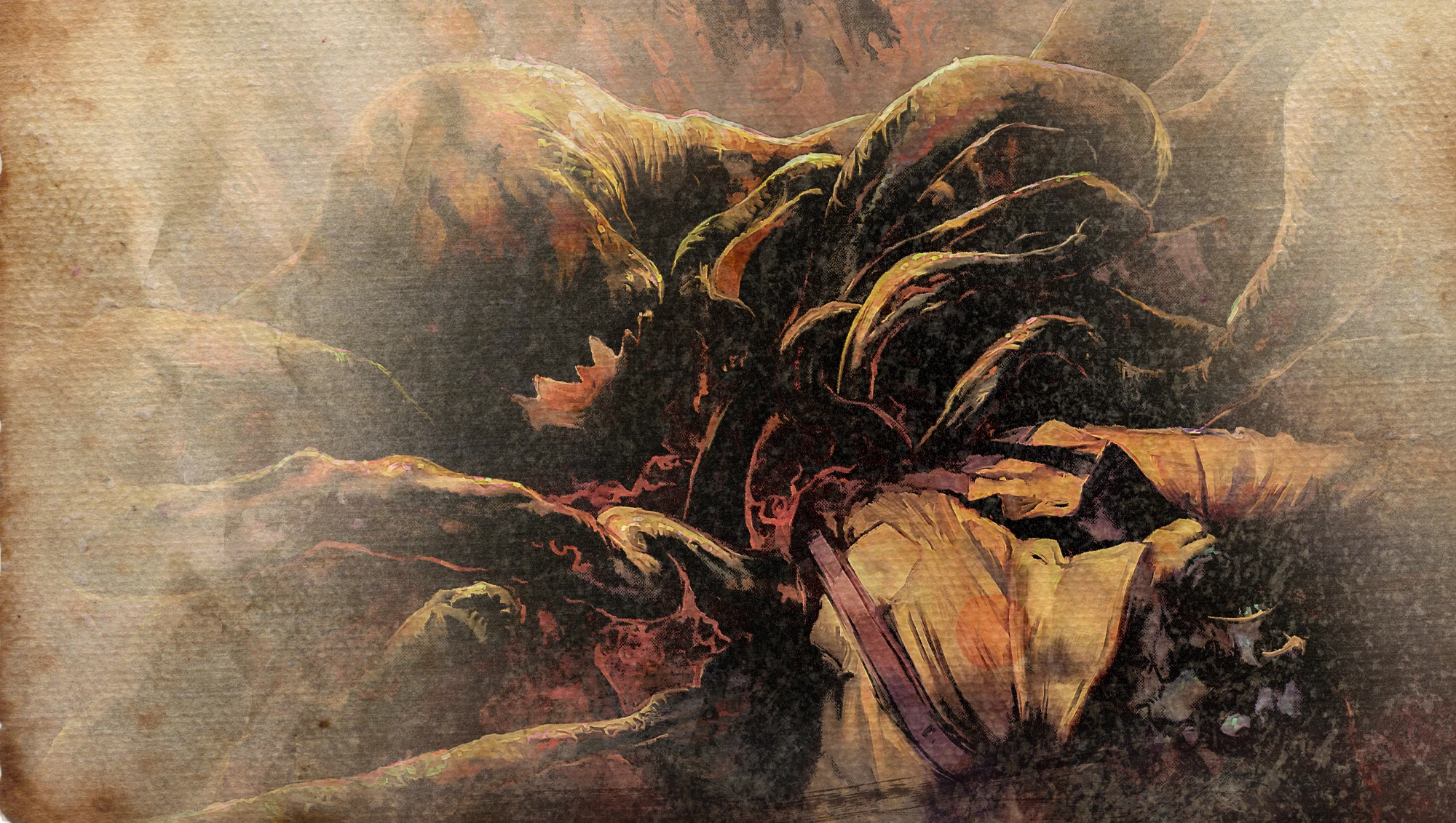
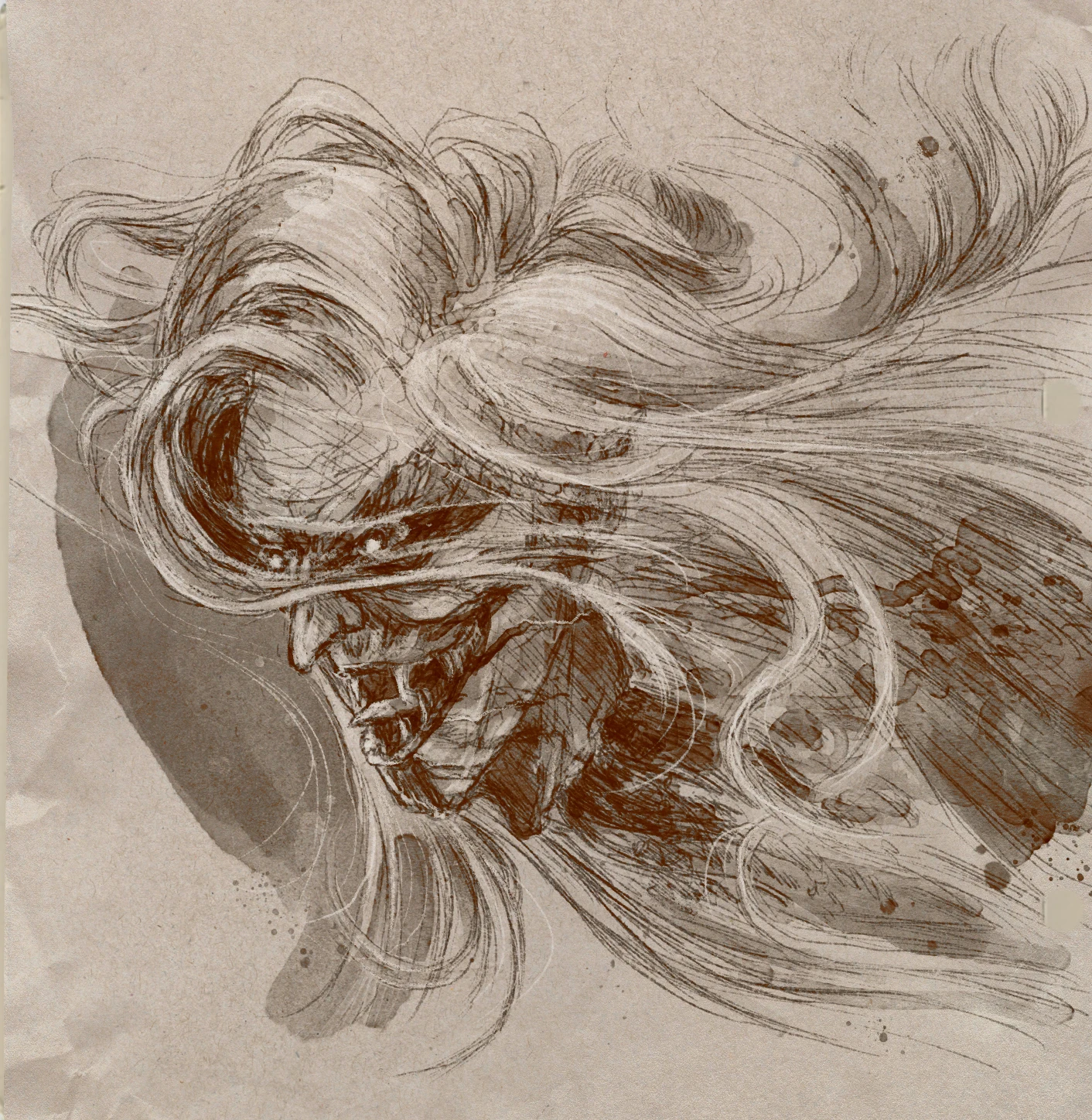
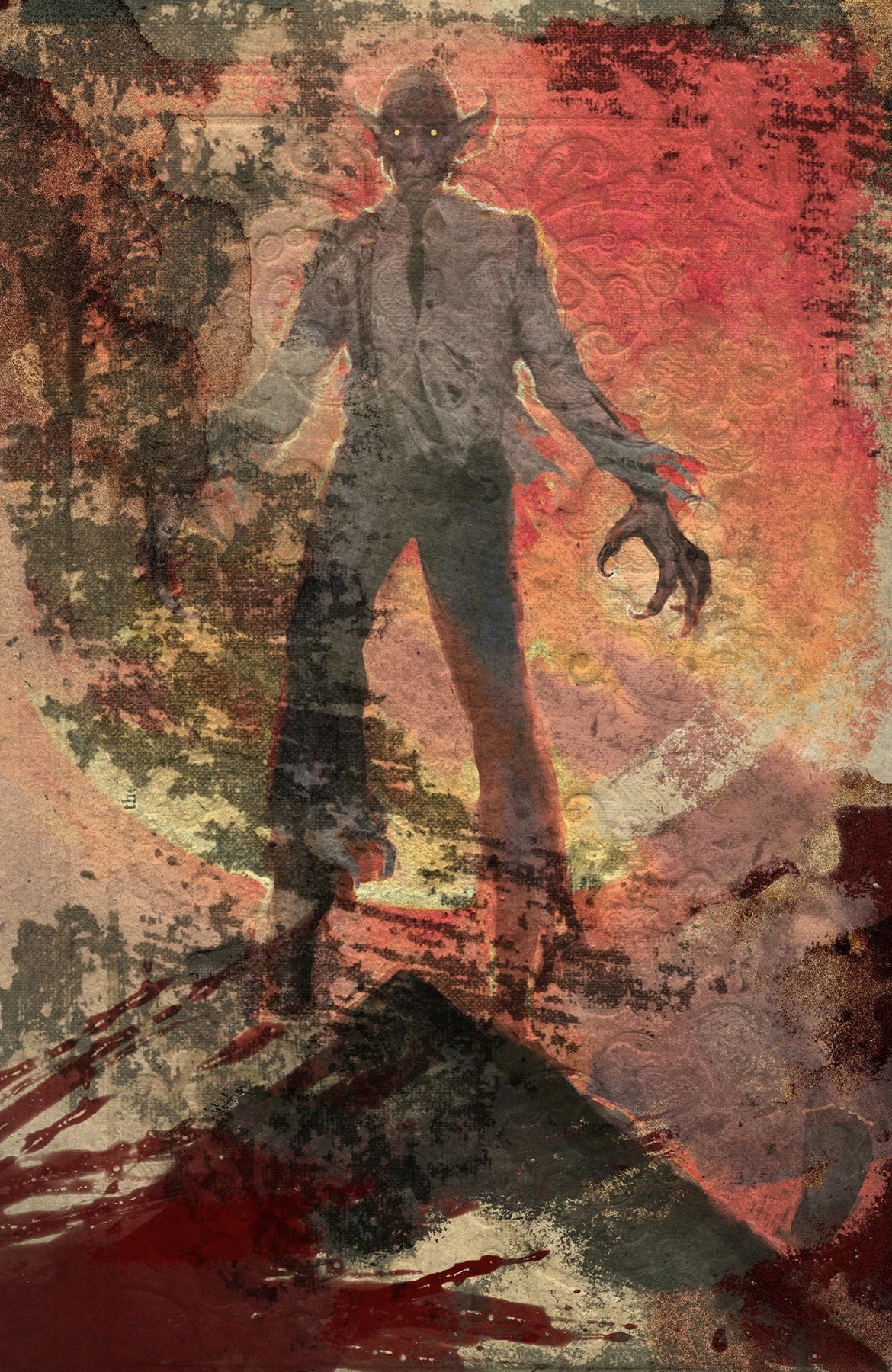
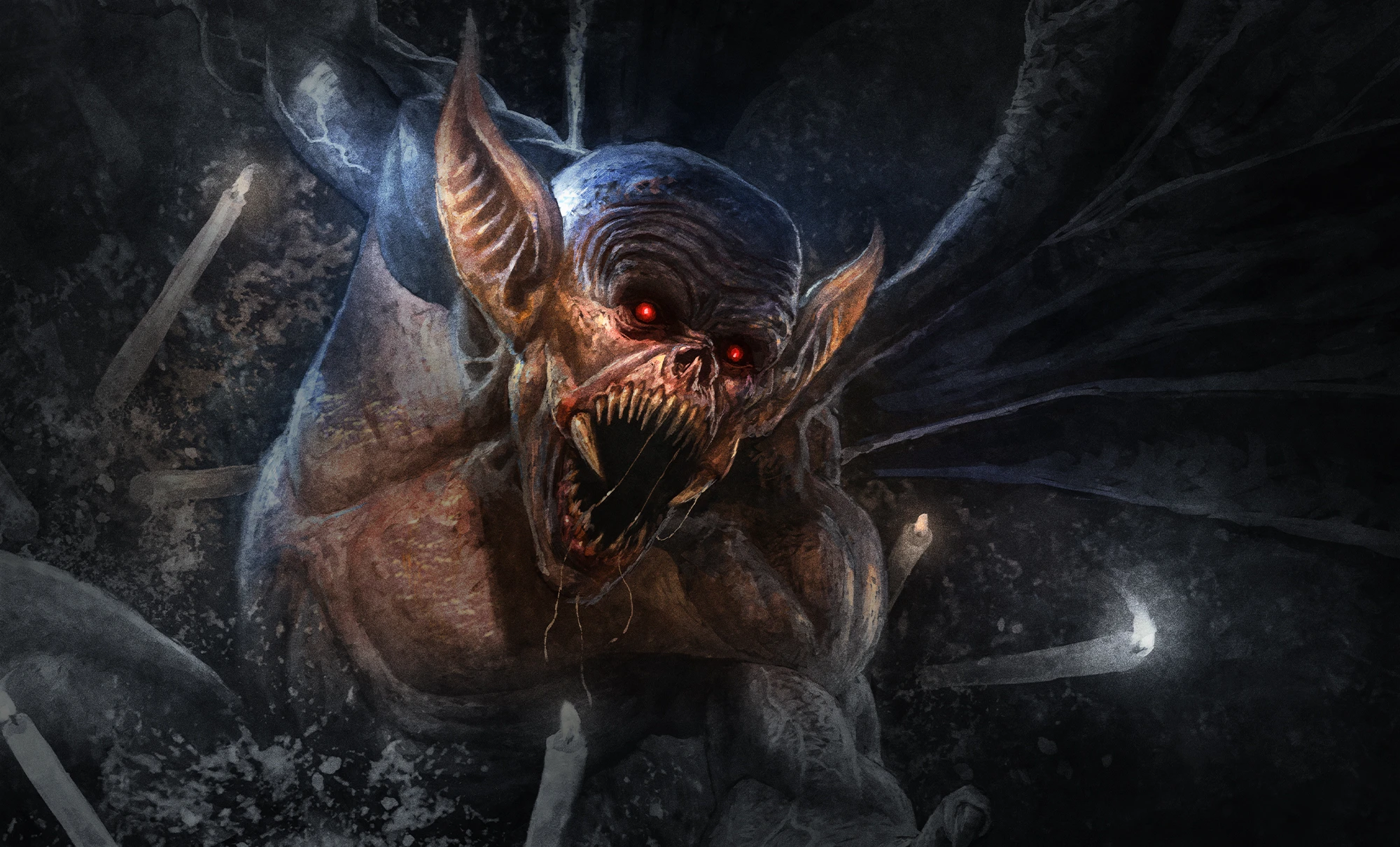
In all lands and epochs, the concept of a “blood drinker” or “vampire” frenzies forth, in this form or that. As varied in shape and behavior as the cultures which birth them, these creatures yet share a commonality – a ravenous thirst for the vis vitalis, or vital force, which motivates us all. Be it in the form of blood, or some less prosaic substance, these life-stealers can only prolong their own existence by shortening ours.
Indeed, if one goes by ancient myths, this has been the case since the days of Babylon, if not even earlier. No less an authority than Lewis Spence mentions a surfeit of vampiric spirits in his seminal Myths and Legends of Babylonia and Assyria. Or what of Philostratus and his lamiae, who are considered synonymous with the dreaded empusai?
And what of the now-extinct Tcho-Tcho people of Indo-China, who supposedly propitiated several of their gods with offerings of blood – specifically human? Prinn’s De Vermis Mysteriis (of which a heavily bowdlerized copy can be found in the Ruggles Rare Book Collection at Miskatonic University’s Orne Library) speaks of certain antediluvian civilizations and their contact with otherworldly beings who demanded blood in exchange for service; a star vampire, if you will, or celestial soul-drinker. Perhaps these beings and the gods of the Tcho-Tcho were one and the same.
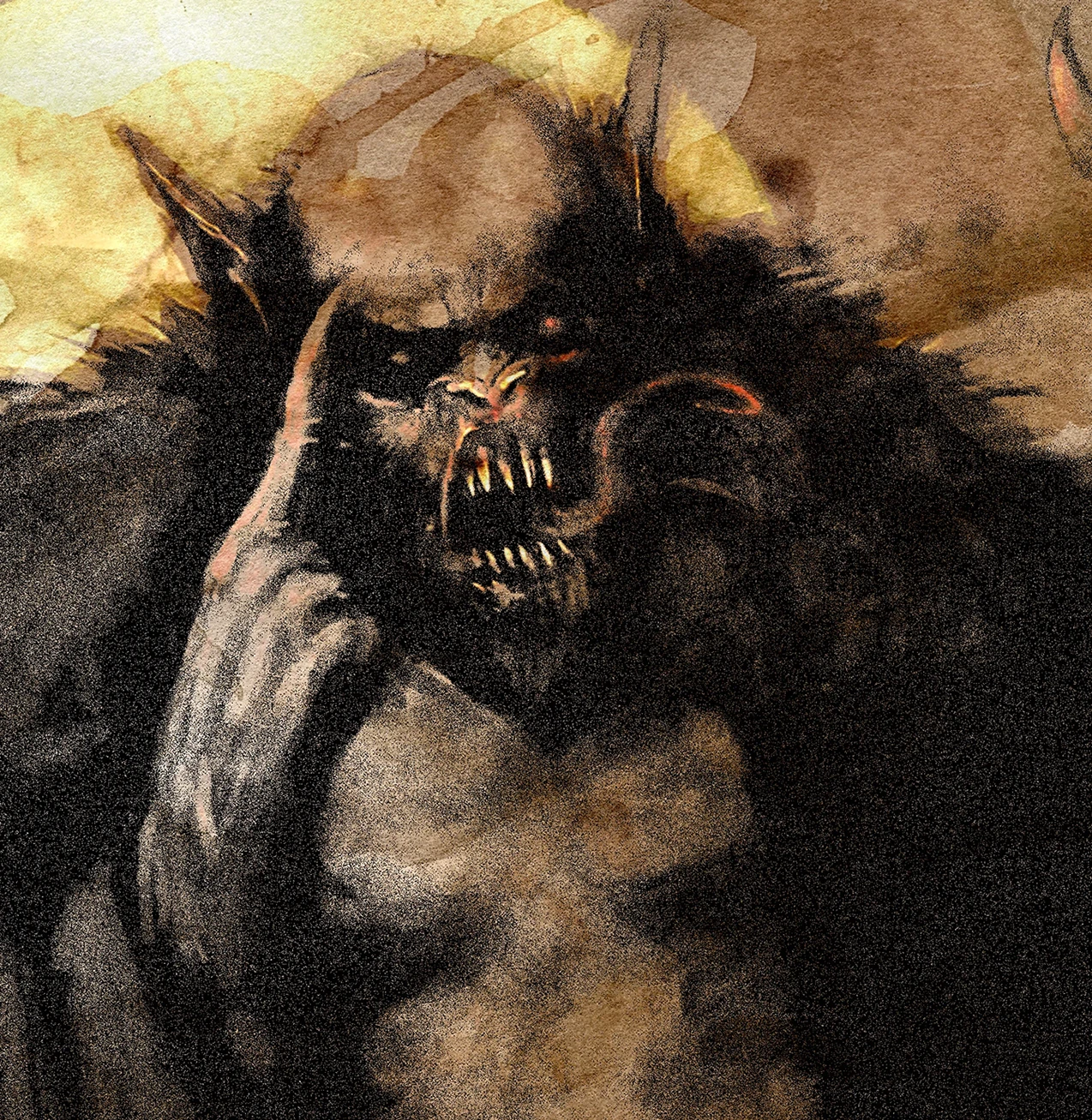
Of course, thanks to the works of popular writers such as Polidori, Le Fanu, and Stoker, as well as academics such as Alonzo Typer and the late Harley Warren, it is the more prosaic vampire with which we are most familiar – or rather, the vampir of Slavic myth. This creature is oft-times a bloated revenant, an ‘incorruptible’ as Warren termed it, battening on the blood of the living – specifically the kith and kin of its former self.
There are regional variations; the Serbian vukodlak or “wolf’s hair” is either a shape-changing man-eater or a blood-drinking corpse depending on who you ask; the Greeks have their vrykolakas, which has some similarities to the kara-kondjolos of the Turks – both shapechangers, both blood-drinkers; or consider the upiór of the steppes, an unclean soul condemned to wander and feed upon those unlucky enough to encounter it.
Indeed, one might be forgiven for believing that the whole of the Black Sea coast to be a breeding ground for the undead, if such stories are to be believed. The peoples of that region most certainly do; why else would the Turks have put the village of Stregoicavar to the torch during the invasion of 1526, citing a “nest of foulness; upiórs and other evil things…”, as noted by Ottoman chronicler, Mahmud Tercüman?
Such tales are not confined to one geographic region. In the rainforests of Malaysia, people whisper of the penanggalan, which detaches its head at nightfall, so that it might fly through the air, seeking the blood of its neighbors. Among the Hausa people of West Africa, there is a persistent belief in a type of witch whom devours souls by means of the blood. And even as a child in Tōkyo, I heard tales of blood-swilling yōkai, such as the yamahime of the mountains whom can only be warded off by the brandishment of a dried slug. And I was warned to stay out of graveyards by my grandparents, lest the kubikajiri snatch off my head and lap up the blood that spewed from the stump.
Such stories are not unknown even in my new homeland. New England suffered its own peculiarly American “vampire panic” some years ago. While many consider this to merely be a case of hysteria driven by an outbreak of consumption, it nonethless gripped the region for nearly a century, particularly in Rhode Island, where as recently as only a few years ago, the city of Providence was rocked by whispers of a feral, lean shape with blazing eyes and a hunger for blood equal to that of any kubikajiri or vurdolak.
These savage attacks occurred one summer while I was visiting friends in the area, and so I was able to experience the matter first-hand, as it were. The papers later tied the attacks to a madman named Ward, but those I spoke to in the aftermath mentioned a man known as Dr. Allen as a likelier suspect.
Nor was this the only depredation that Providence suffered. I refer, of course, to that strange, yellow house on Benefit Street, which is the epicentre of so many odd tales – too many, in fact, to recount here. Suffice to say, it was asserted by one Ann White of Exeter, Rhode Island, that a vampire slumbered beneath the old house, and that the only thing for it was to exhume the beast and burn its heart, or, failing that, pierce it with a wooden stake.
To my knowledge, no one took her advice.
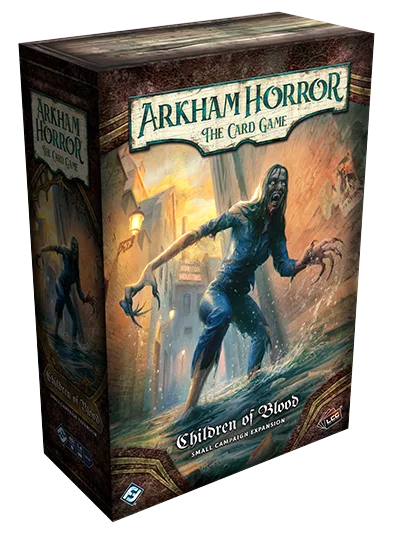
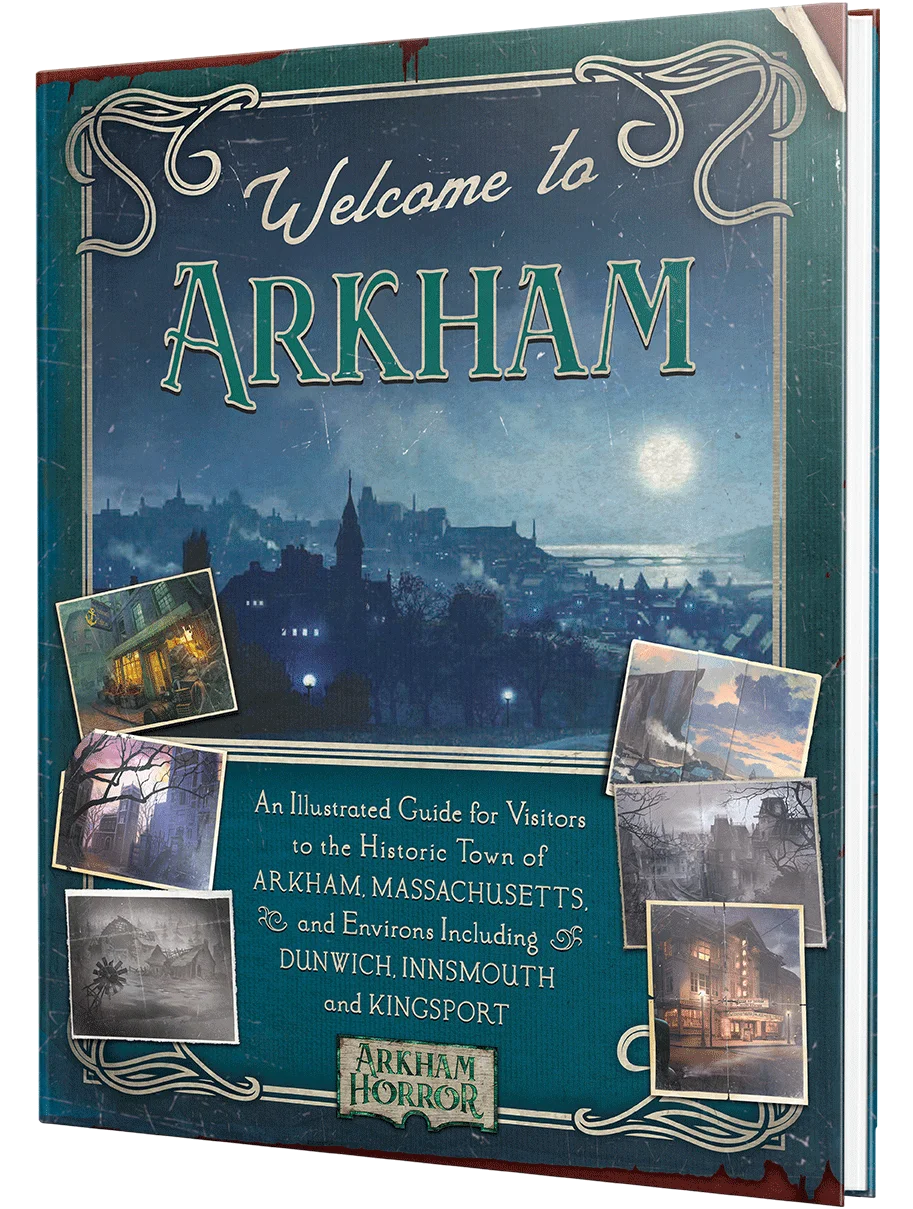
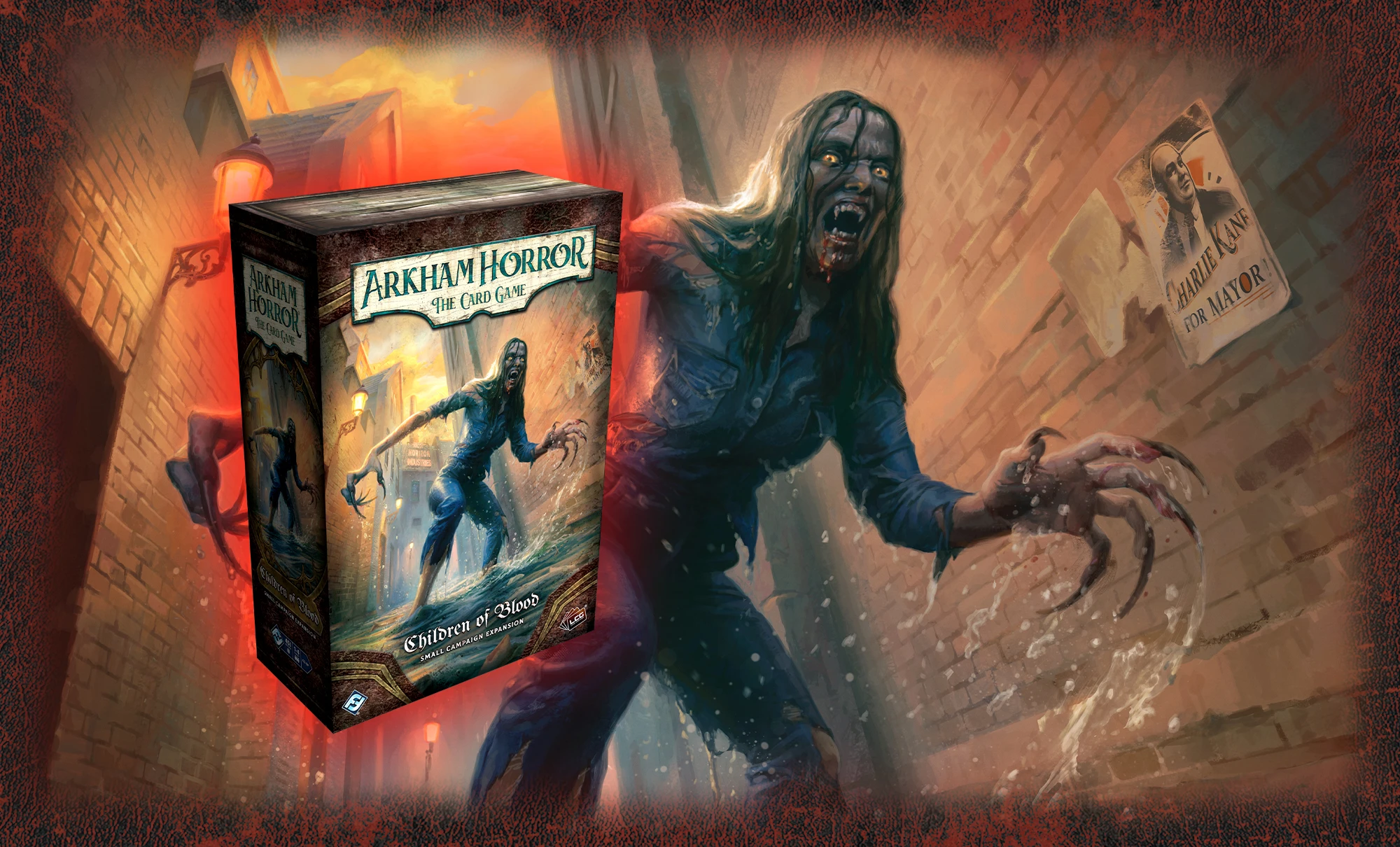
The Children of Blood small campaign expansion for Arkham Horror: The Card Game will be released on August 14! And if you’d like to read more of the Book of Living Myths, you’ll find additional pages in Welcome to Arkham: An Illustrated Guide for Visitors.
Written by Josh Reynolds with Nick Tyler