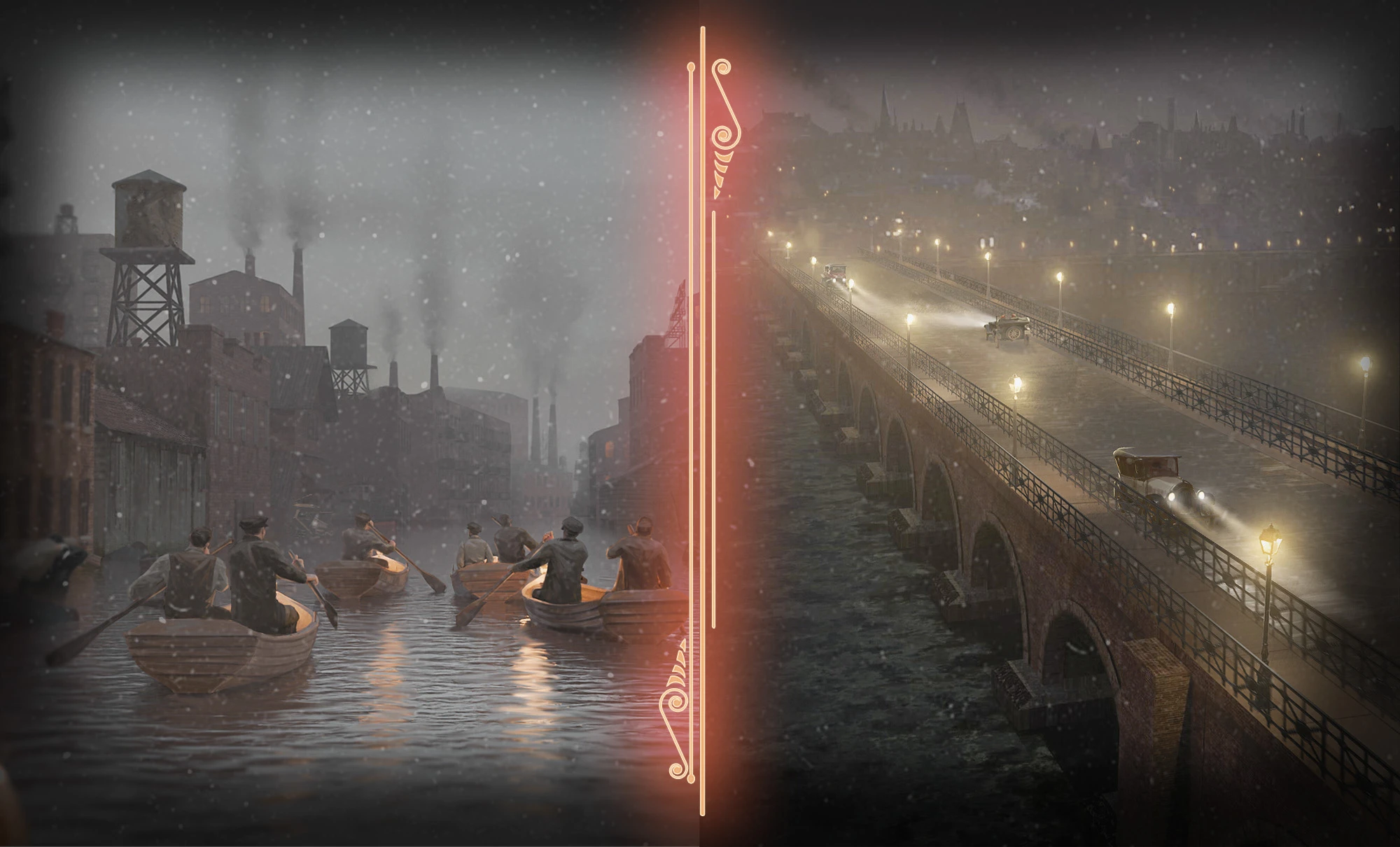
Arkham has been forever changed by the “inundation,” a disastrous flood caused by a mysterious storm that seemed to come out of nowhere. The ever-diligent Arkham Historical Society continue to document the changes in the city in the form of new entries for their esteemed Welcome to Arkham. Read on to learn about the greatly improved Main Street and the newly constructed New Horizons Industries meat packing facility.
Main Street
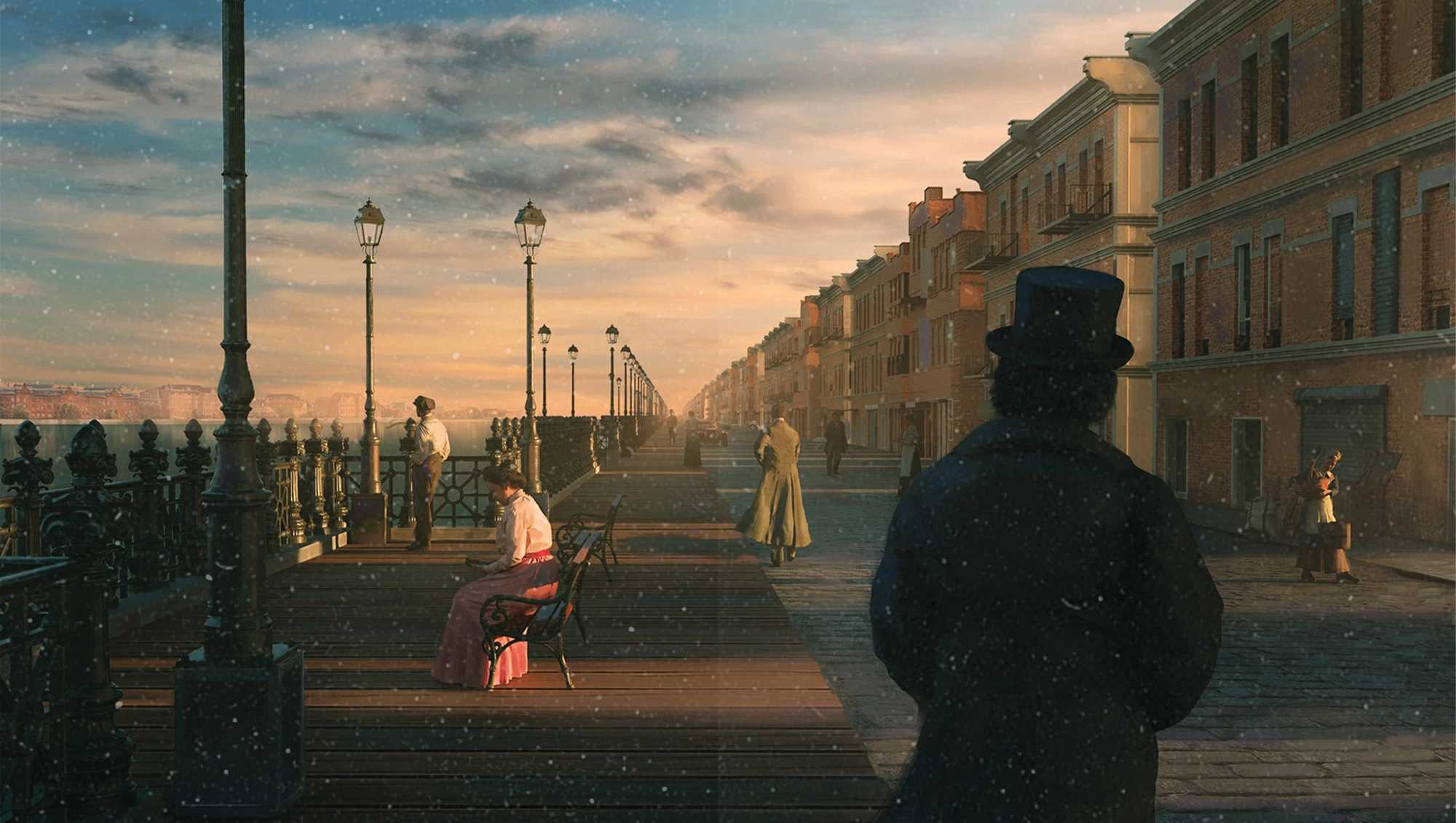
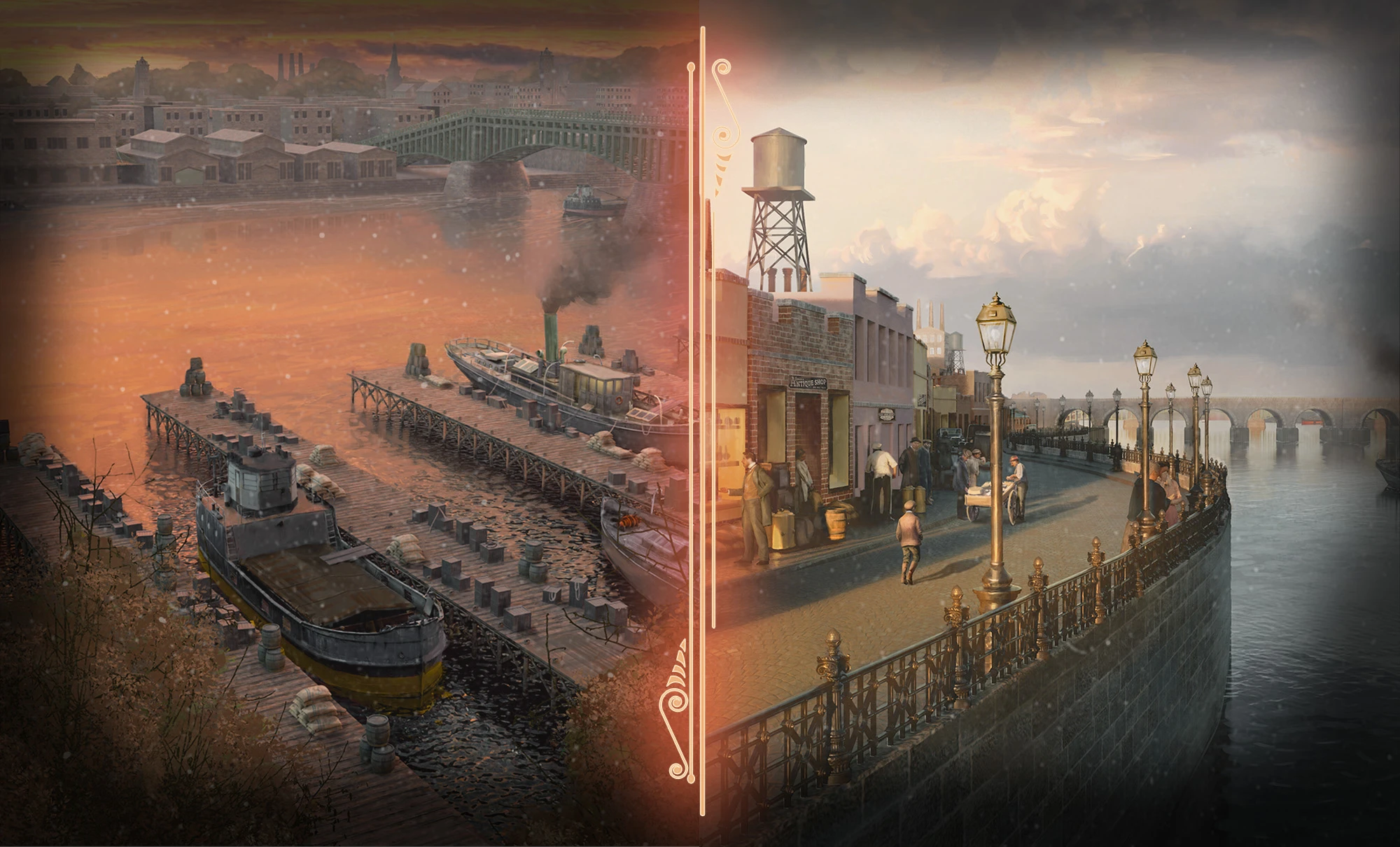
The masterwork of Arkham’s rehabilitation efforts, Arkham’s Main Street transformed from a secondary business street into something grander out of sheer necessity. River Street, which had previously served as the primary artery of Rivertown, was heavily damaged in the flooding. During rebuilding, rescue and recovery crews made extensive use of Main Street. To accommodate traffic, the street was widened, becoming a prime example of how much a city and its people can adapt to any sort of change.
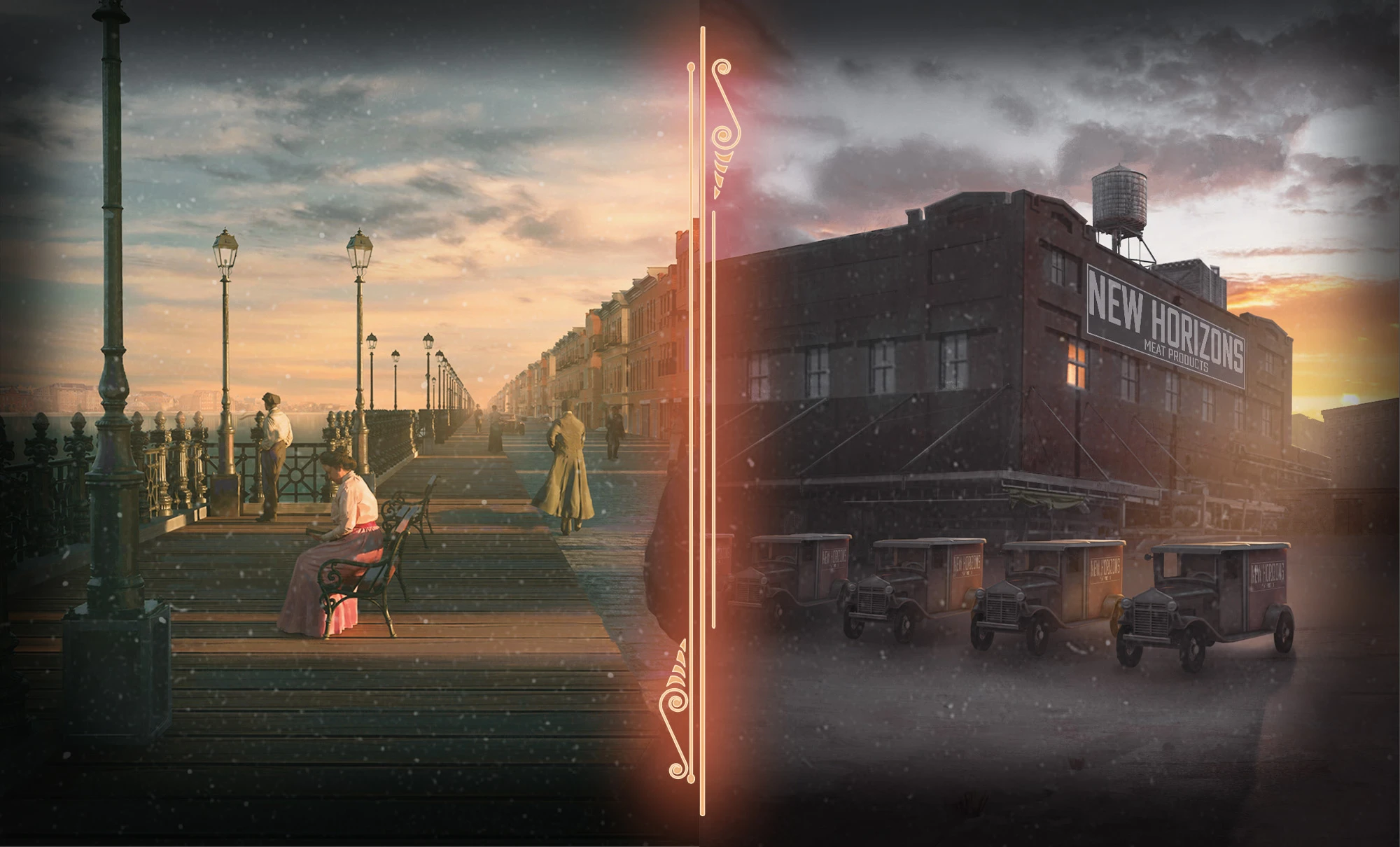
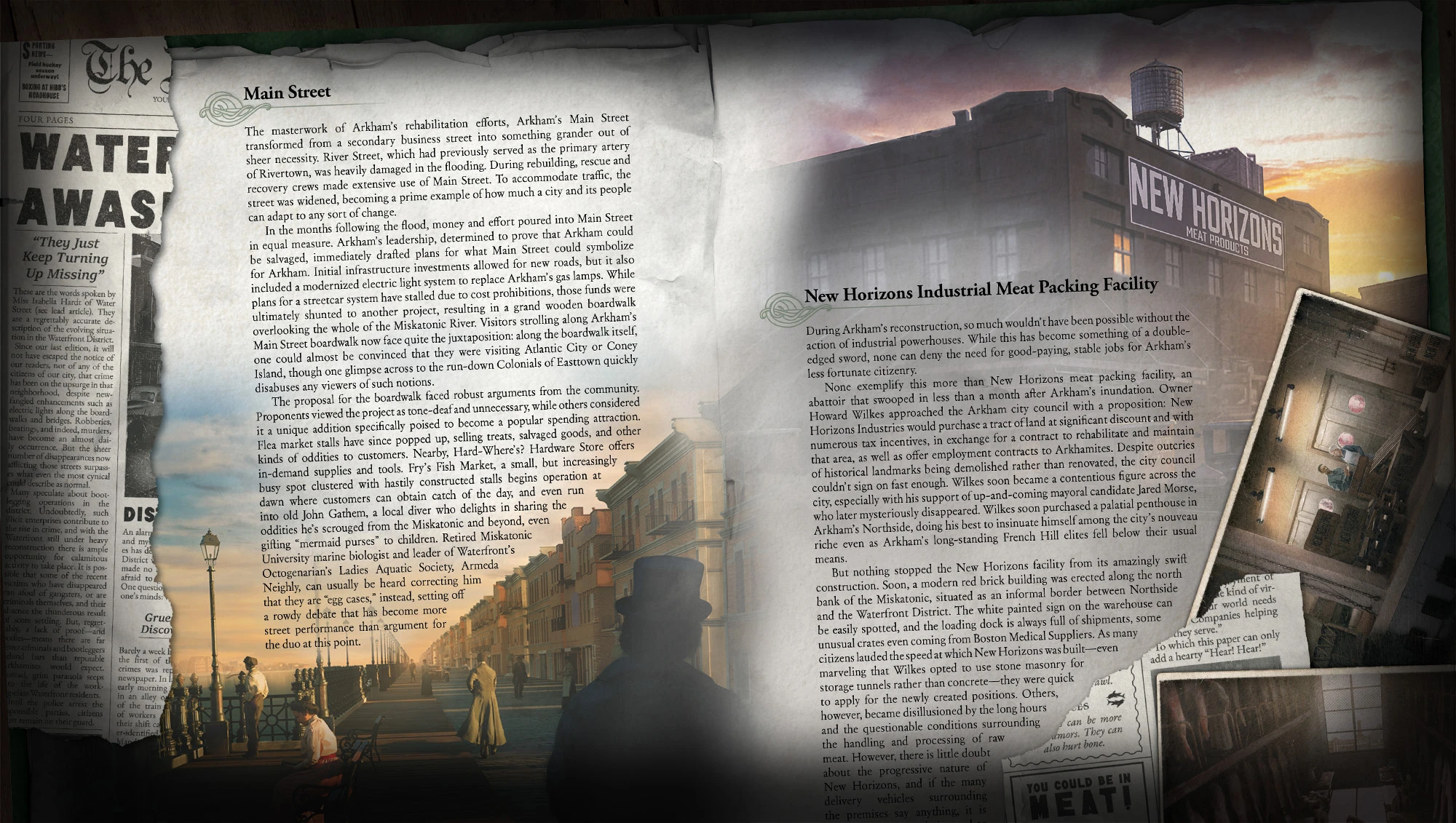
In the months following the flood, money and effort poured into Main Street in equal measure. Arkham’s leadership, determined to prove that Arkham could be salvaged, immediately drafted plans for what Main Street could symbolize for Arkham. Initial infrastructure investments allowed for new roads, but it also included a modernized electric light system to replace Arkham’s gas lamps. While plans for a streetcar system have stalled due to cost prohibitions, those funds were ultimately shunted to another project, resulting in a grand wooden boardwalk overlooking the whole of the Miskatonic River. Visitors strolling along Arkham’s Main Street boardwalk now face quite the juxtaposition: along the boardwalk itself, one could almost be convinced that they were visiting Atlantic City or Coney Island, though one glimpse across to the run-down Colonials of Easttown quickly disabuses any viewers of such notions.
The proposal for the boardwalk faced robust arguments from the community. Proponents viewed the project as tone-deaf and unnecessary, while others considered it a unique addition specifically poised to become a popular spending attraction. Flea market stalls have since popped up, selling treats, salvaged goods, and other kinds of oddities to customers. Nearby, Hard-Where’s? Hardware Store offers in-demand supplies and tools. Fry’s Fish Market, a small, but increasingly busy spot clustered with hastily constructed stalls begins operation at dawn where customers can obtain catch of the day, and even run into old John Gathem, a local diver who delights in sharing the oddities he’s scrouged from the Miskatonic and beyond, even gifting “mermaid purses” to children. Retired Miskatonic University marine biologist and leader of Waterfront’s Octogenarian’s Ladies Aquatic Society, Armeda Neighly, can usually be heard correcting him that they are “egg cases,” instead, setting off a rowdy debate that has become more street performance than argument for the duo at this point.
New Horizons Industries
During Arkham’s reconstruction, so much wouldn’t have been possible without the action of industrial powerhouses. While this has become something of a double-edged sword, none can deny the need for good-paying, stable jobs for Arkham’s less fortunate citizenry.
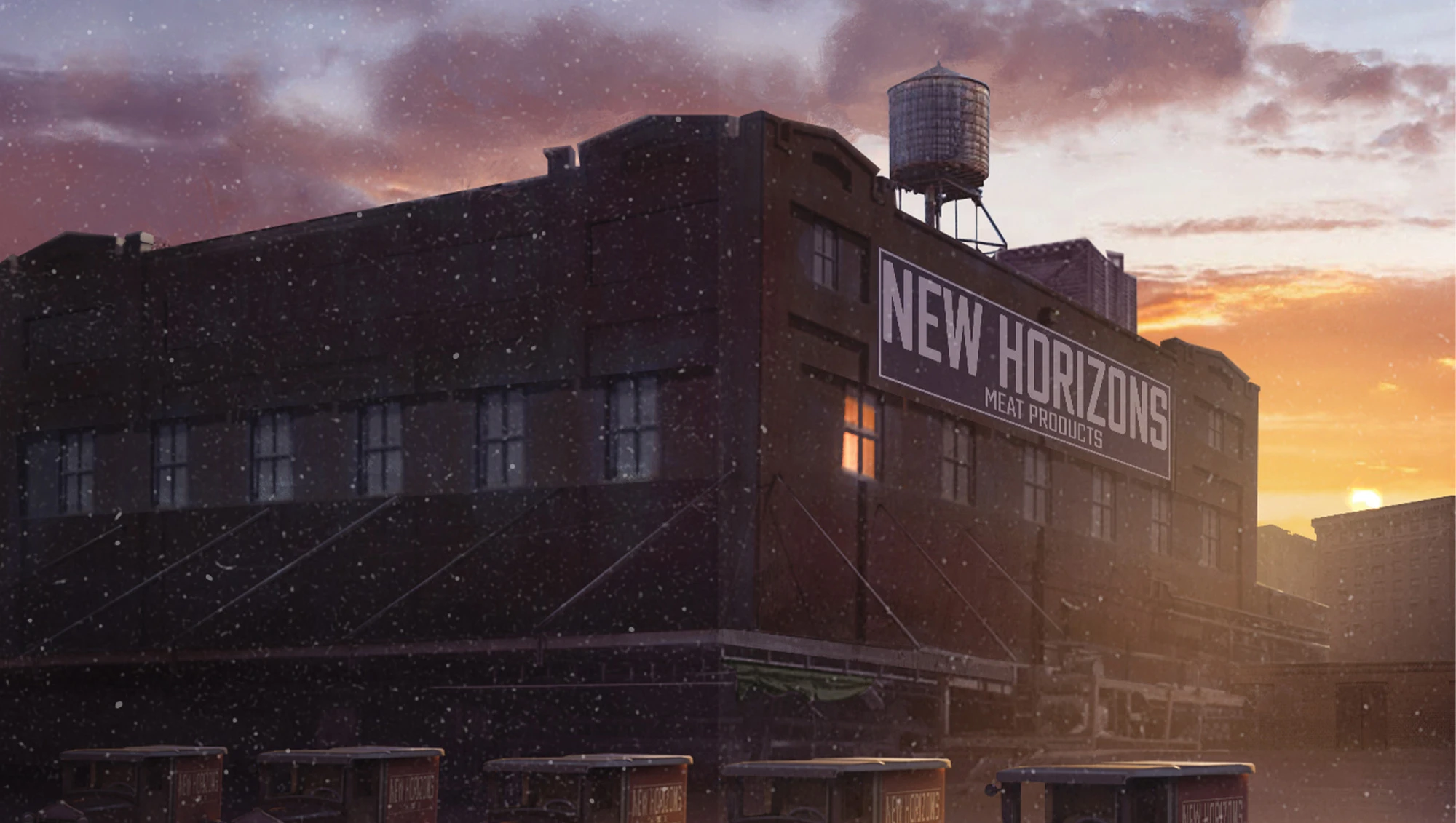
None exemplify this more than the New Horizons meat packing facility, an abattoir that swooped in less than a month after Arkham’s inundation. Owner Howard Wilkes approached the Arkham city council with a proposition: New Horizons Industries would purchase a tract of land at significant discount and with numerous tax incentives, in exchange for a contract to rehabilitate and maintain that area, as well as offer employment contracts to Arkhamites. Despite outcries of historical landmarks being demolished rather than renovated, the city council couldn’t sign on fast enough. Wilkes soon became a contentious figure across the city, especially with his support of up-and-coming mayoral candidate Jared Morse, who later mysteriously disappeared. Wilkes soon purchased a palatial penthouse in Arkham’s Northside, doing his best to insinuate himself among the city’s nouveau riche even as Arkham’s long-standing French Hill elites fell below their usual means. But nothing stopped the New Horizons facility from its amazingly swift construction. Soon, a modern red brick building was erected along the north bank of the Miskatonic, situated as an informal border between Northside and the Waterfront District. The white painted sign on the warehouse can be easily spotted, and the loading dock is always full of shipments, some unusual crates even coming from Boston Medical Suppliers. As many citizens lauded the speed at which New Horizons was built—even marveling that Wilkes opted to use stone masonry for storage tunnels rather than concrete—they were quick to apply for the newly created positions. Others, however, became disillusioned by the long hours and the questionable conditions surrounding the handling and processing of raw meat. However, there is little doubt about the progressive nature of New Horizons, and if the many delivery vehicles surrounding the premises say anything, it is that New Horizons is integral to Arkham’s industrial boom.
Text by A.P. Klosky.