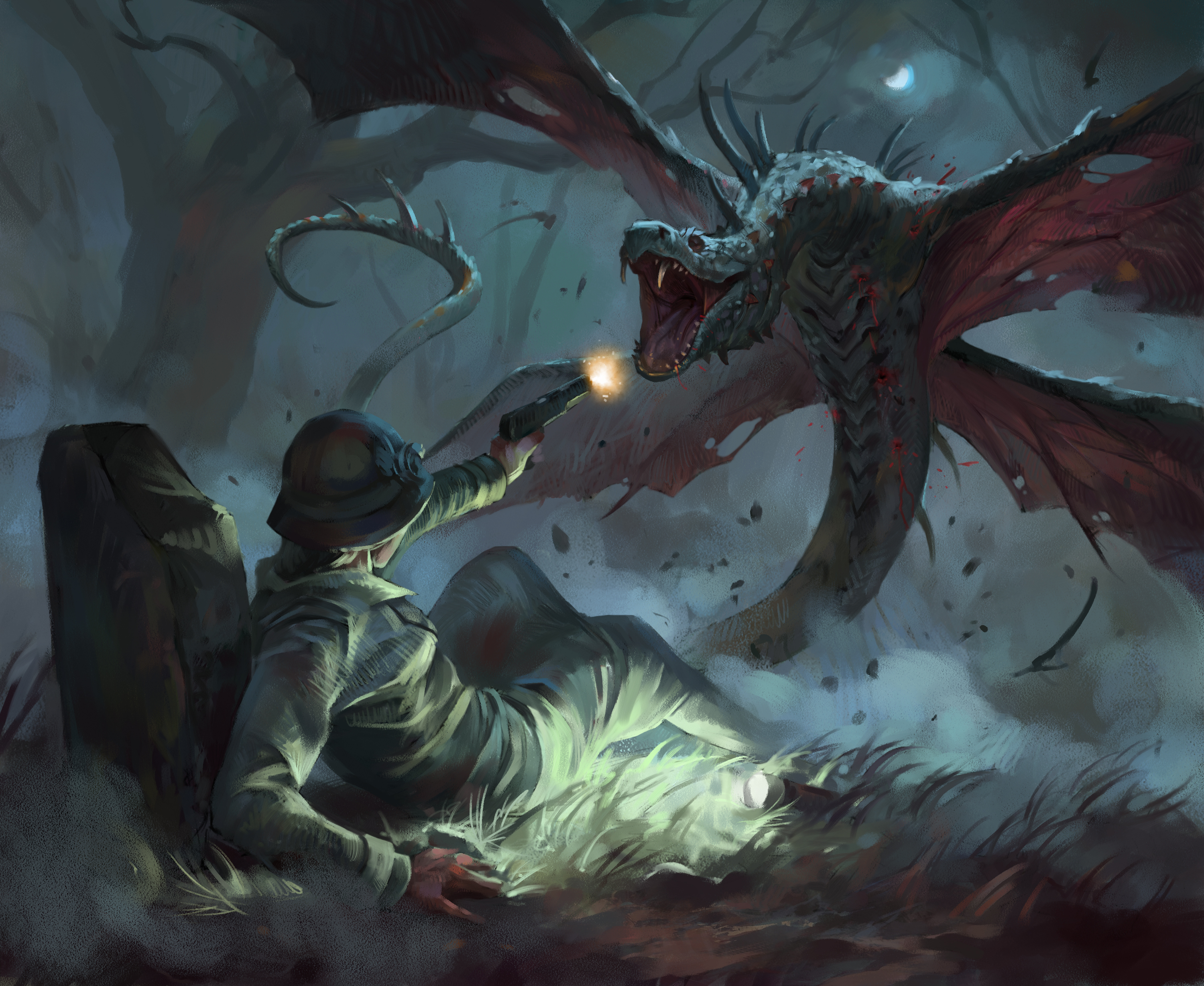
Arkham has been forever changed by the “inundation,” a disastrous flood caused by a mysterious storm that seemed to come out of nowhere. Now, as the city picks up the pieces, the ever-diligent Arkham Historical Society have begun to chronicle the rebuilding efforts and the way the character of the city is evolving, in the form of new entries for their esteemed Welcome to Arkham…
Waterfront District
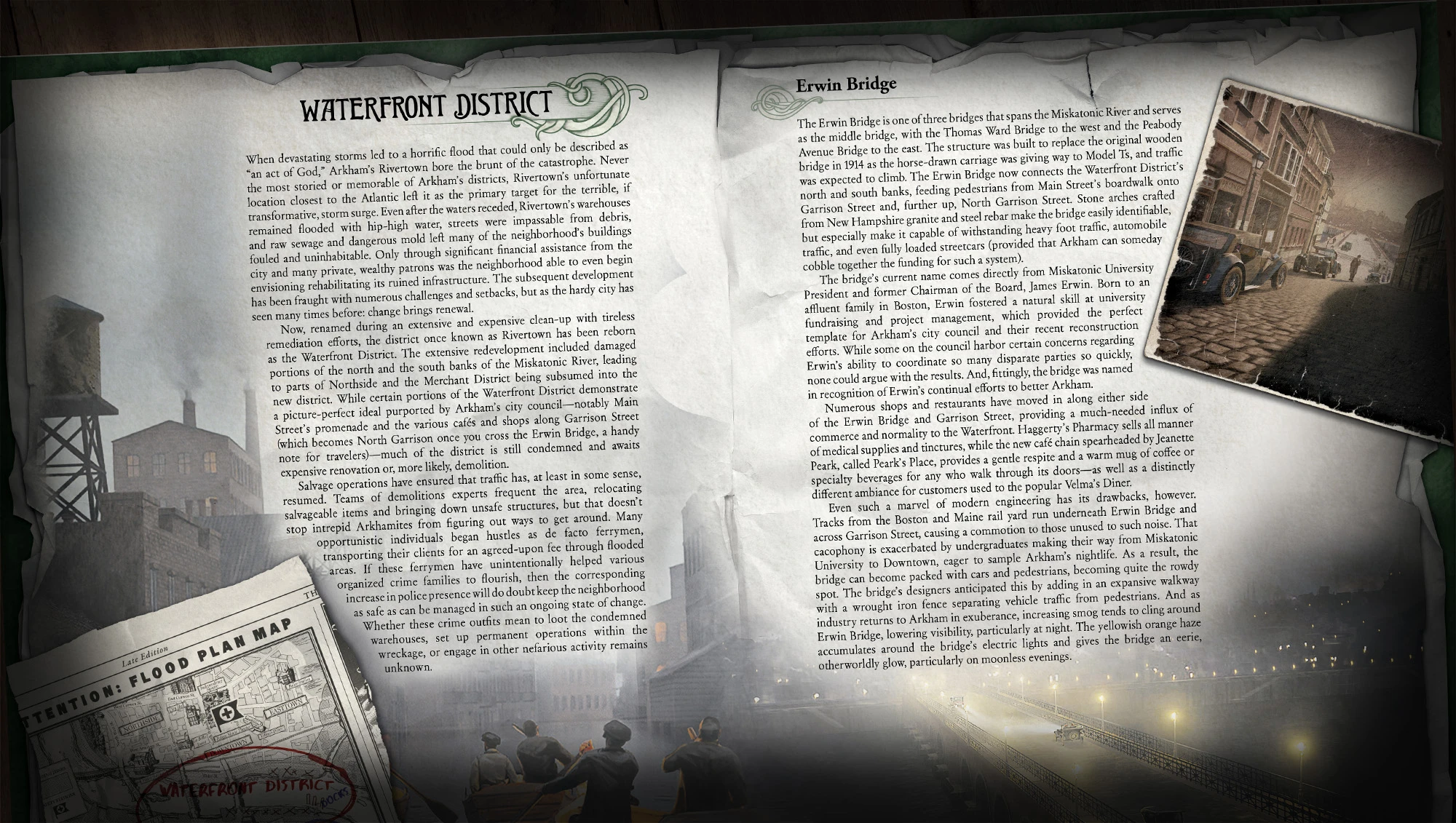
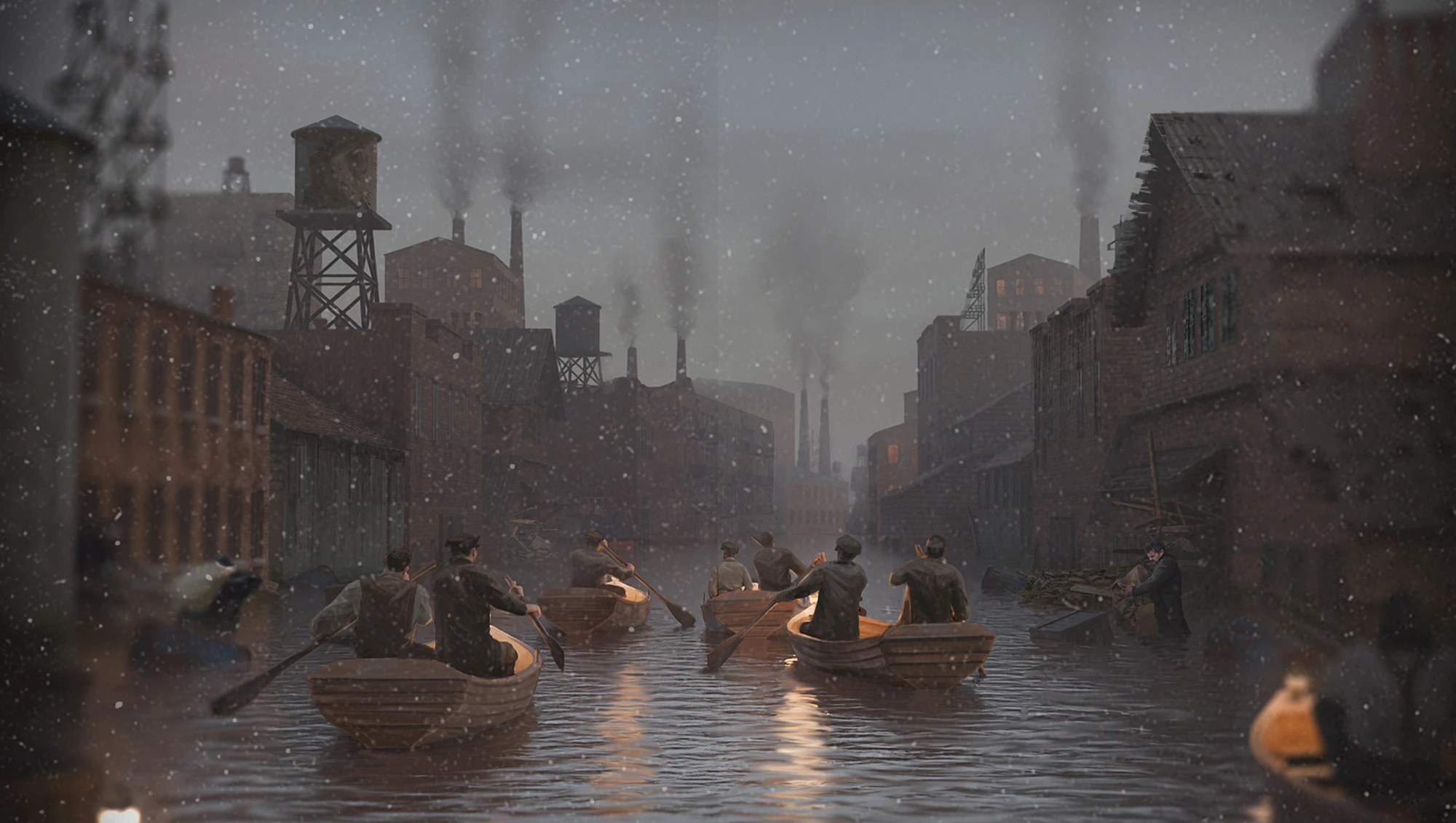
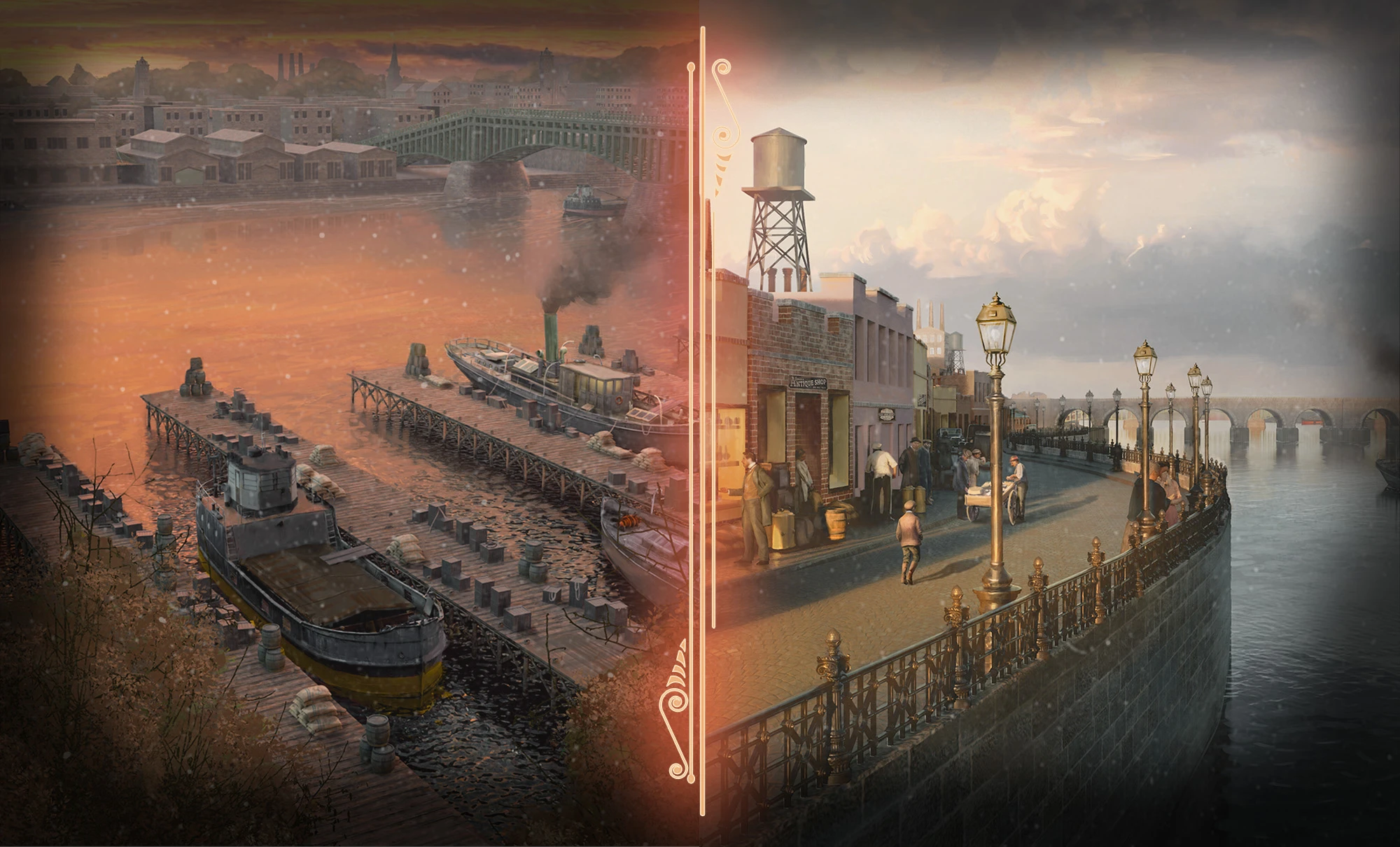
When devastating storms led to a horrific flood that could only be described as “an act of God,” Arkham’s Rivertown bore the brunt of the catastrophe. Never the most storied or memorable of Arkham’s districts, Rivertown’s unfortunate location closest to the Atlantic left it as the primary target for the terrible, if transformative, storm surge. Even after the waters receded, Rivertown’s warehouses remained flooded with hip-high water, streets were impassable from debris, and raw sewage and dangerous mold left many of the neighborhood’s buildings fouled and uninhabitable. Only through significant financial assistance from the city and many private, wealthy patrons was the neighborhood able to even begin envisioning rehabilitating its ruined infrastructure. The subsequent development has been fraught with numerous challenges and setbacks, but as the hardy city has seen many times before: change brings renewal.
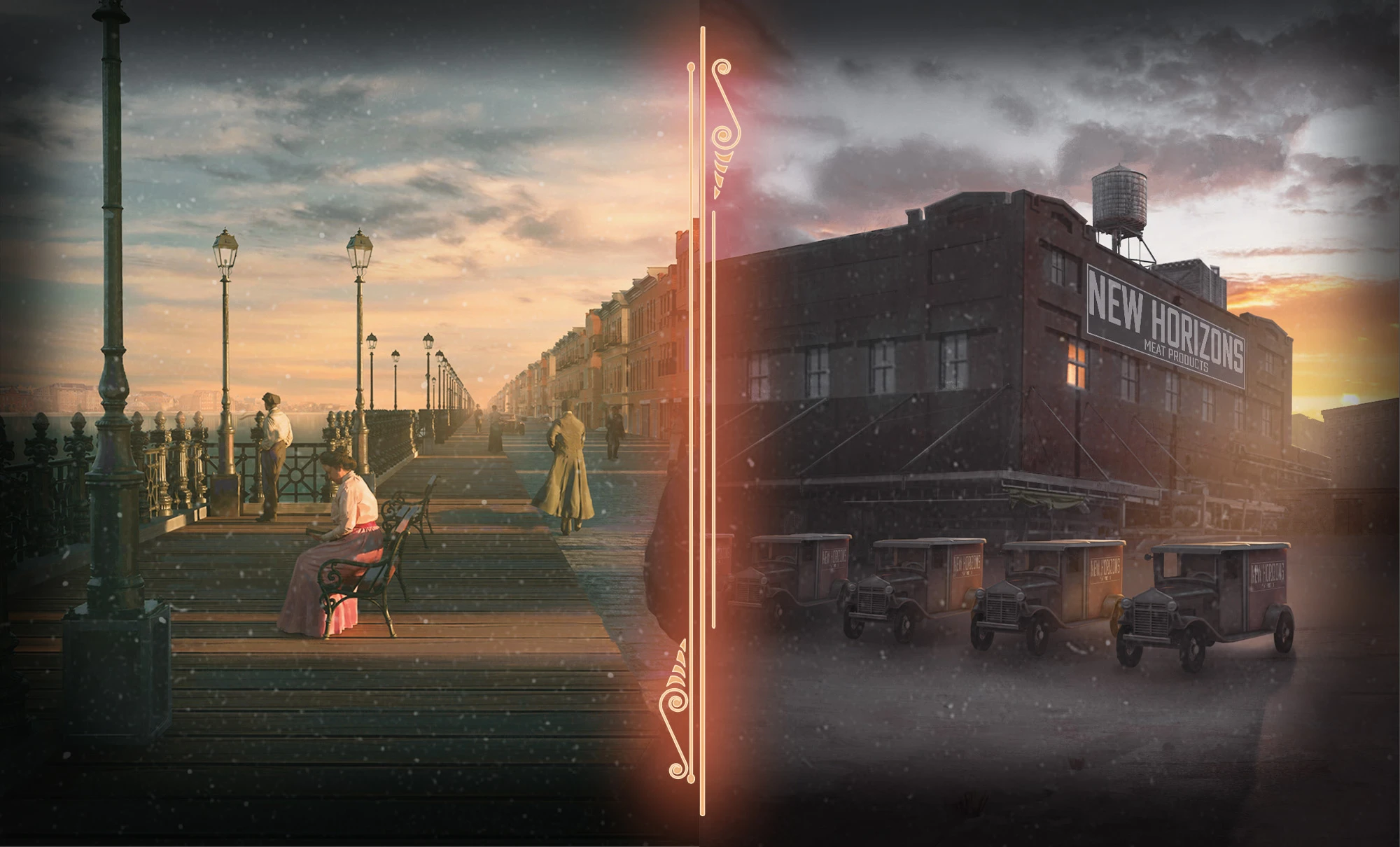
Now, renamed during an extensive and expensive clean-up with tireless remediation efforts, the district once known as Rivertown has been reborn as the Waterfront District. The extensive redevelopment included damaged portions of the north and the south banks of the Miskatonic River, leading to parts of Northside and the Merchant District being subsumed into the new district. While certain portions of the Waterfront District demonstrate a picture-perfect ideal purported by Arkham’s city council—notably Main Street’s promenade and the various cafés and shops along Garrison Street (which becomes North Garrison once you cross the Erwin Bridge, a handy note for travelers)—much of the district is still condemned and awaits expensive renovation or, more likely, demolition.
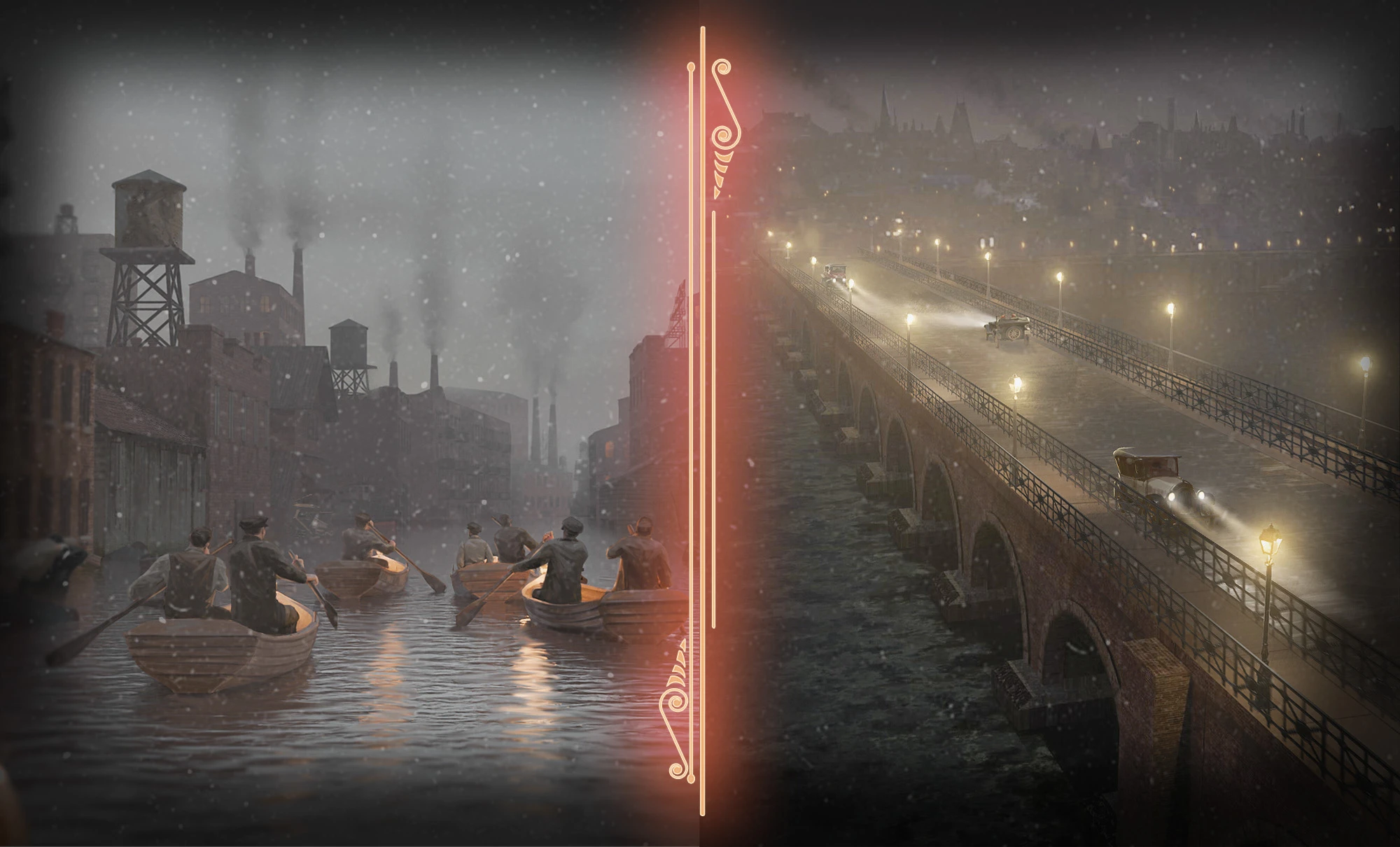
Salvage operations have ensured that traffic has, at least in some sense, resumed. Teams of demolitions experts frequent the area, relocating salvageable items and bringing down unsafe structures, but that doesn’t stop intrepid Arkhamites from figuring out ways to get around. Many opportunistic individuals began hustles as de facto ferrymen, transporting their clients for an agreed-upon fee through flooded areas. If these ferrymen have unintentionally helped various organized crime families to flourish, then the corresponding increase in police presence will do doubt keep the neighborhood as safe as can be managed in such an ongoing state of change. Whether these crime outfits mean to loot the condemned warehouses, set up permanent operations within the wreckage, or engage in other nefarious activity remains unknown.
Erwin Bridge
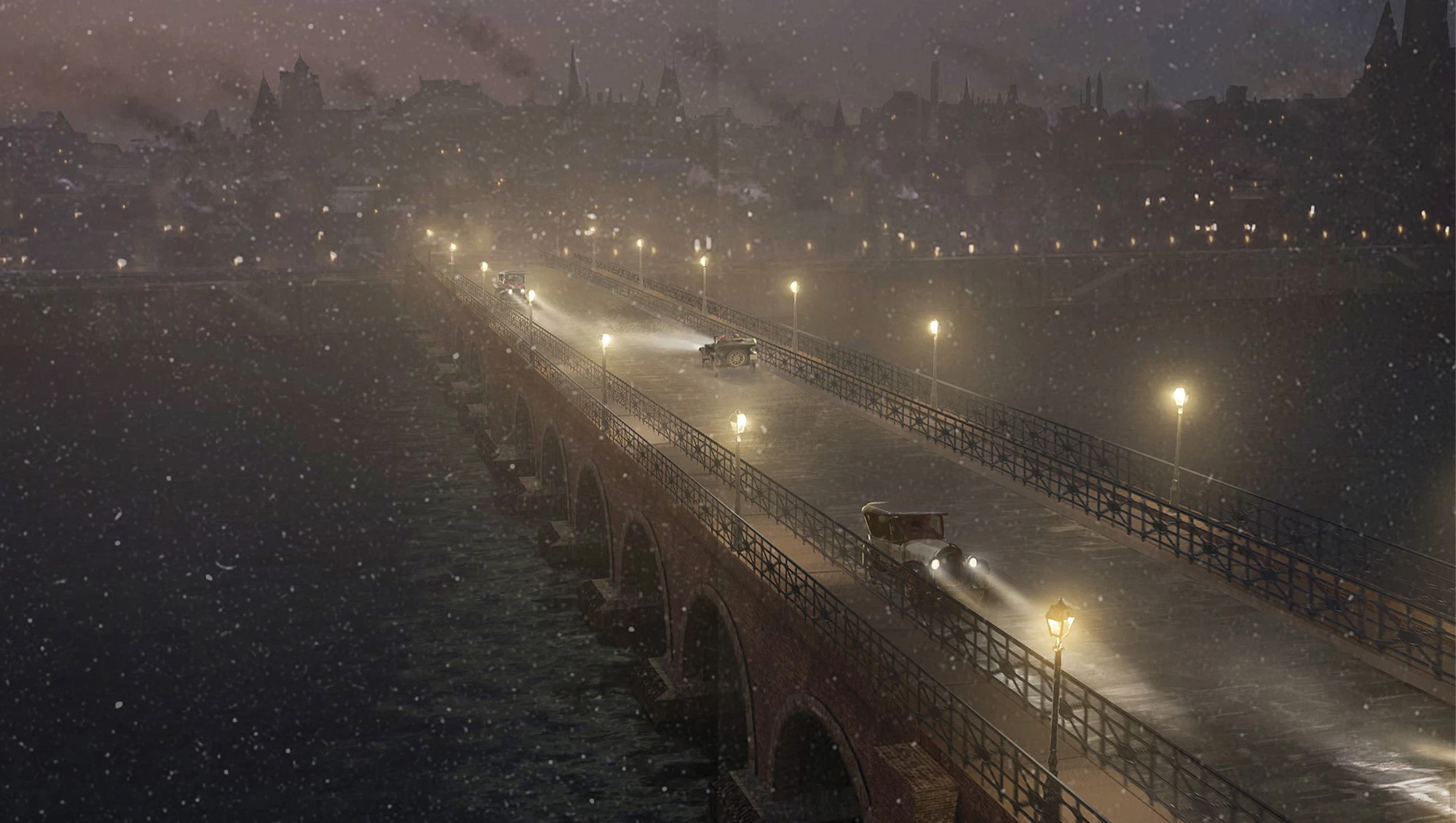
The Erwin Bridge is one of three bridges that spans the Miskatonic River and serves as the middle bridge, with the Thomas Ward Bridge to the west and the Peabody Avenue Bridge to the east. The structure was built to replace the original wooden bridge in 1914 as the horse-drawn carriage was giving way to Model Ts, and traffic was expected to climb. The Erwin Bridge now connects the Waterfront District’s north and south banks, feeding pedestrians from Main Street’s boardwalk onto Garrison Street and, further up, North Garrison Street. Stone arches crafted from New Hampshire granite and steel rebar make the bridge easily identifiable, but especially make it capable of withstanding heavy foot traffic, automobile traffic, and even fully loaded streetcars (provided that Arkham can someday cobble together the funding for such a system).
The bridge’s current name comes directly from Miskatonic University President and former Chairman of the Board, James Erwin. Born to an affluent family in Boston, Erwin fostered a natural skill at university fundraising and project management, which provided the perfect template for Arkham’s city council and their recent reconstruction efforts. While some on the council harbor certain concerns regarding Erwin’s ability to coordinate so many disparate parties so quickly, none could argue with the results. And, fittingly, the bridge was named in recognition of Erwin’s continual efforts to better Arkham.
Numerous shops and restaurants have moved in along either side of the Erwin Bridge and Garrison Street, providing a much-needed influx of commerce and normality to the Waterfront. Haggerty’s Pharmacy sells all manner of medical supplies and tinctures, while the new café chain spearheaded by Jeanette Peark, called Peark’s Place, provides a gentle respite and a warm mug of coffee or specialty beverages for any who walk through its doors—as well as a distinctly different ambiance for customers used to the popular Velma’s Diner.
Even such a marvel of modern engineering has its drawbacks, however. Tracks from the Boston and Maine rail yard run underneath Erwin Bridge and across Garrison Street, causing a commotion to those unused to such noise. That cacophony is exacerbated by undergraduates making their way from Miskatonic University to Downtown, eager to sample Arkham’s nightlife. As a result, the bridge can become packed with cars and pedestrians, becoming quite the rowdy spot. The bridge’s designers anticipated this by adding in an expansive walkway with a wrought iron fence separating vehicle traffic from pedestrians. And as industry returns to Arkham in exuberance, increasing smog tends to cling around Erwin Bridge, lowering visibility, particularly at night. The yellowish orange haze accumulates around the bridge’s electric lights and gives the bridge an eerie, otherworldly glow, particularly on moonless evenings.
Text by A.P. Klosky.